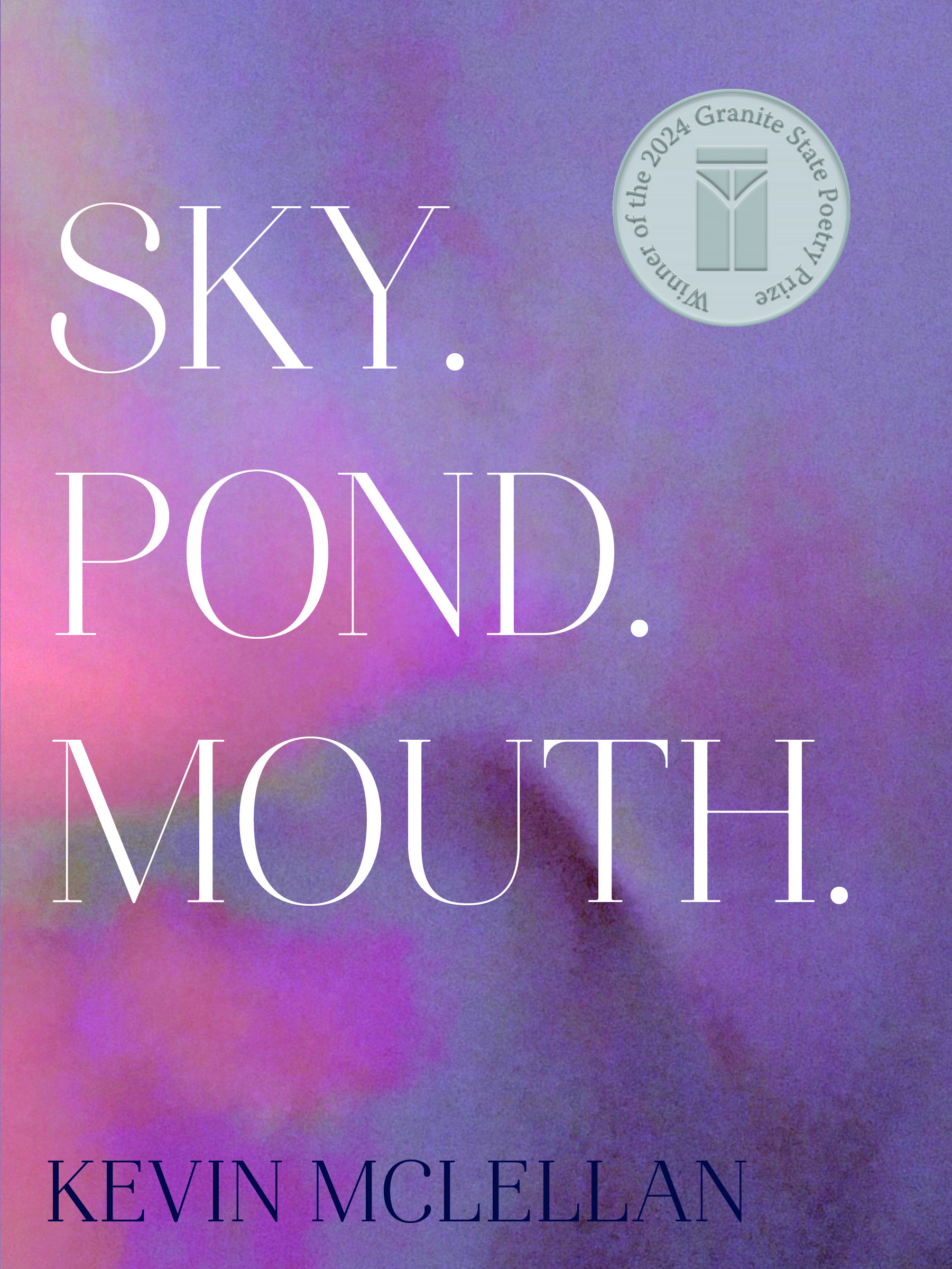
“My thoughts have no place / to go, except more inward.” These lines that open Kevin McLellan’s “Winterberries,” the long final poem of SKY. POND. MOUTH might serve as epitome of the book entire. A radical interiority marks this lyric vision, ushering us all in to the common crisis not one of us knows how to share: to be a self, one who says I, in this body I have, which is mine and no one else’s. Here, as a fine poet is fated to know, the self isn’t singular, but like the housefly that sees with a compound-eye, the self is a compound-I.
In poems that navigate the poetic inheritance of experimental queer poetries—Ashbery, Schuyler, Stein—McLellan records the inner echoes of mind and body: language and desire, illness and eros, flora and fauna, memory and moment, all interpenetrate and blur in the weird-wonder of life’s within-ness. With tender care and sharp wit, McLellan gives us one of poetry’s primary gifts: where we are most alone, he sees us, sings for and with us, and leaves us less alone.”
Dan Beachy-Quick is the author of Variations on Dawn and Dusk, longlisted for the 2019 National Book Award for Poetry, and several other books.
###
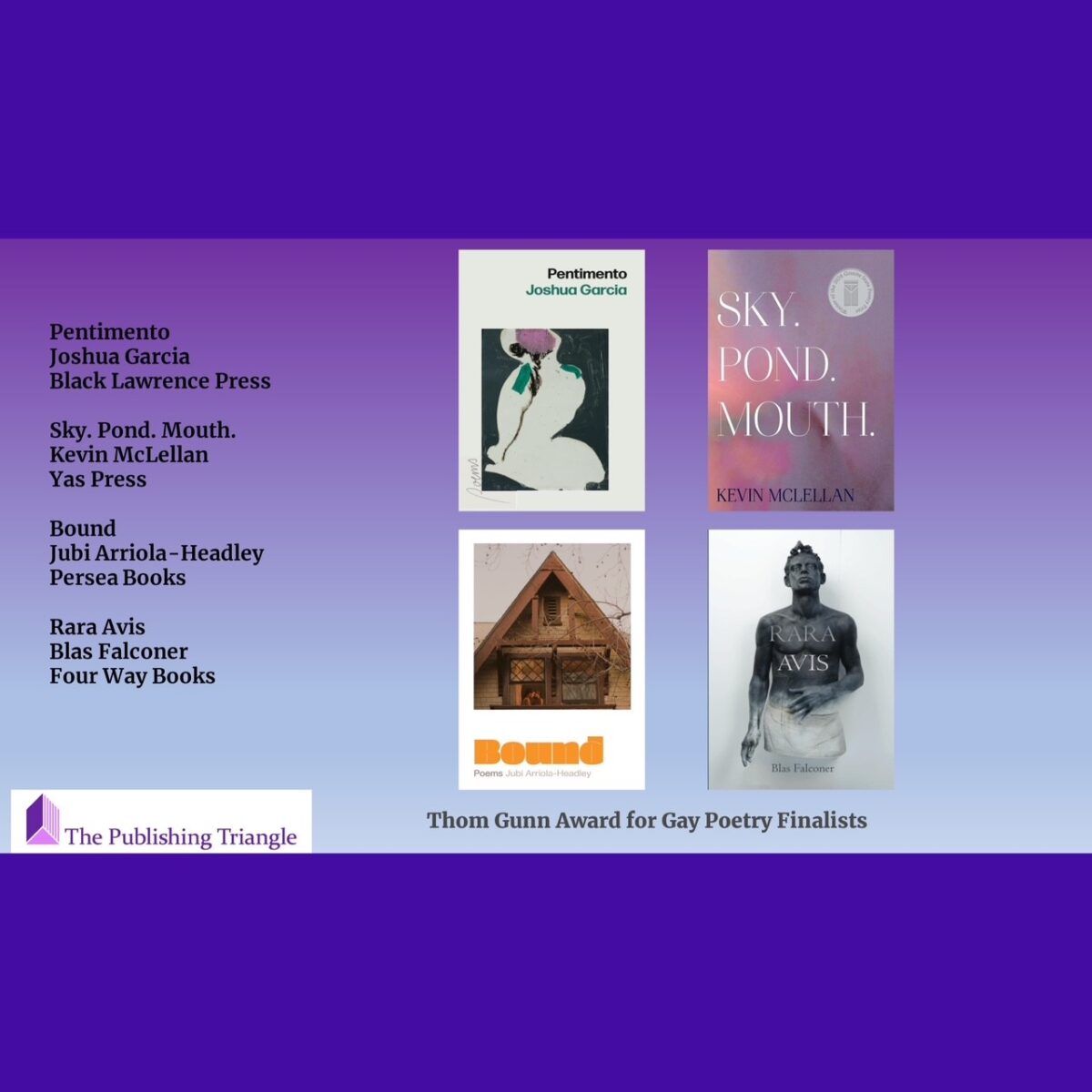
Orbis non sufficit. Long before the translation of this Latin motto became the title of a James Bond movie, it was said to be part of the epitaph of Alexander the Great: “A tomb now suffices for him for whom the world was not enough.” In the historical reference, that phrase speaks to humanity’s insatiable craving for existence, vitality, and all its diverse embodiments—even though we can never escape the knowledge that all experience is resolutely ephemeral. Still, those words came to mind when I was reading Kevin McLellan’s newest collection, Sky. Pond. Mouth.— selected by Alexandria Peary for the 2024 Granite State Poetry Contest (YAS Press). The speaker that drifts through these poems is alternately anchored in the pains and desires of the flesh—and then suddenly untethered: a thought-mist, capable of passing through the membrane of the material world, suffusing flower, water, cloud, or whatever this child going forth discovers in his day. Might the self be capable of dissolving so easily—abandoning the subject/object distinction, and experiencing what Walt Whitman imagined as a kind of soul-refuge? Could our burden of longing and grief be soothed by even such a momentary escape? Providing a beautiful complexity to his poems, Kevin treats thought itself and the grammar that governs the page with that same spirit of abandon. Once he senses where he needs to go, the poem-as-vehicle invents the very highway beneath its wheels.
An experimental poet and filmmaker, Kevin has authored a half-dozen books and ‘book-objects,’ and appeared in scores of anthologies and journals. In addition to the prize that prompted the publication of this collection, his work has received honors from the Hilary Tham Capital Collection and the Massachusetts Book Awards. His videos have been screened in numerous film expos including: the Berlin Short Film Festival; Flickers’ Rhode Island Film Festival; and the LGBTQ+ Los Angeles Film Festival in which “Dick” won Best Short Form Short. And, in fact, there are many sections of Sky. Pond. Mouth. that almost have the feel of video montage—where the eye’s camera pivots, jump-cuts, and quickly refocuses, leaving our minds racing to match the velocity of the language.
Some of the most impressive pieces in this collection are also the most experimental and challenging—but they tend to be rather long, an impossible fit for my Red Letter format. Still, the book contains compelling short lyrics as well, like today’s “Cloud,” a kind of free-form sonnet which, early on in the book, sets the tone and announces the possibility of heartbreak. “I miss hearing/ him say we, yet I wasn’t/ the one.” Who’d have expected simple pronouns could be so devastating? “Yes, he was thinking// about someone else and/ I look to the sky.” Shifting gears, fractured syntax, sudden changes in direction—throughout the poems, we are given the feeling that older literary expectation only holds us back. There are references honoring many of Kevin’s prominent queer literary forebears—James Schuyler, Gertrude Stein, John Ashbery—but I kept having the feeling that these poems were a kind of 21st century dialogue with the father of almost all contemporary poetry, Whitman himself. The language Kevin brings to bear is both sensuous and calamitous. And after all, loss, illness, and despair can’t help but make us keenly feel our own vulnerabilities. Still, poetry from artists like these inspires a sense of liberation: to embrace this whole ecosystem of nouns; to let every unbridled verb carry us back into the world. “Loafe with me on the grass—loose the stop from/your throat” urges the Good Gray Poet. Or (borrowing words from another of Kevin’s poems) simply welcome a new openness: “…because I am also/ in the lap of a meadow//with my mouth wide open.” Indeed, the world—or the inveterate self—may not be enough for some of us; but, fortunately, we contain multitudes.
STEVEN RATINER is the editor of The Red Letters, author of Grief’s Apostrophe, and President of the New England Poetry Club.
“Kevin McLellan’s Sky. Pond. Mouth is my new favorite book of poems. I could read it every day forever for its tender curiosity about the geranium on the table and the two men dressed alike in the laundromat, its patient pacing through the quietly threatening world. Every line and metaphor is adventurous and thorough in documenting the longing and doubt invested in every moving and every still thing. The earth is dying but we don’t notice it, someone says in the poem “Blue,” but this book notices, and it notices the housefly, and the crumpled paper, and the desire and distance between men—all clearly visible through and against McLellan’s quiet wisdom.”
Lisa Lewis author of Silent Treatment, winner of the National Poetry Series, and several other books.
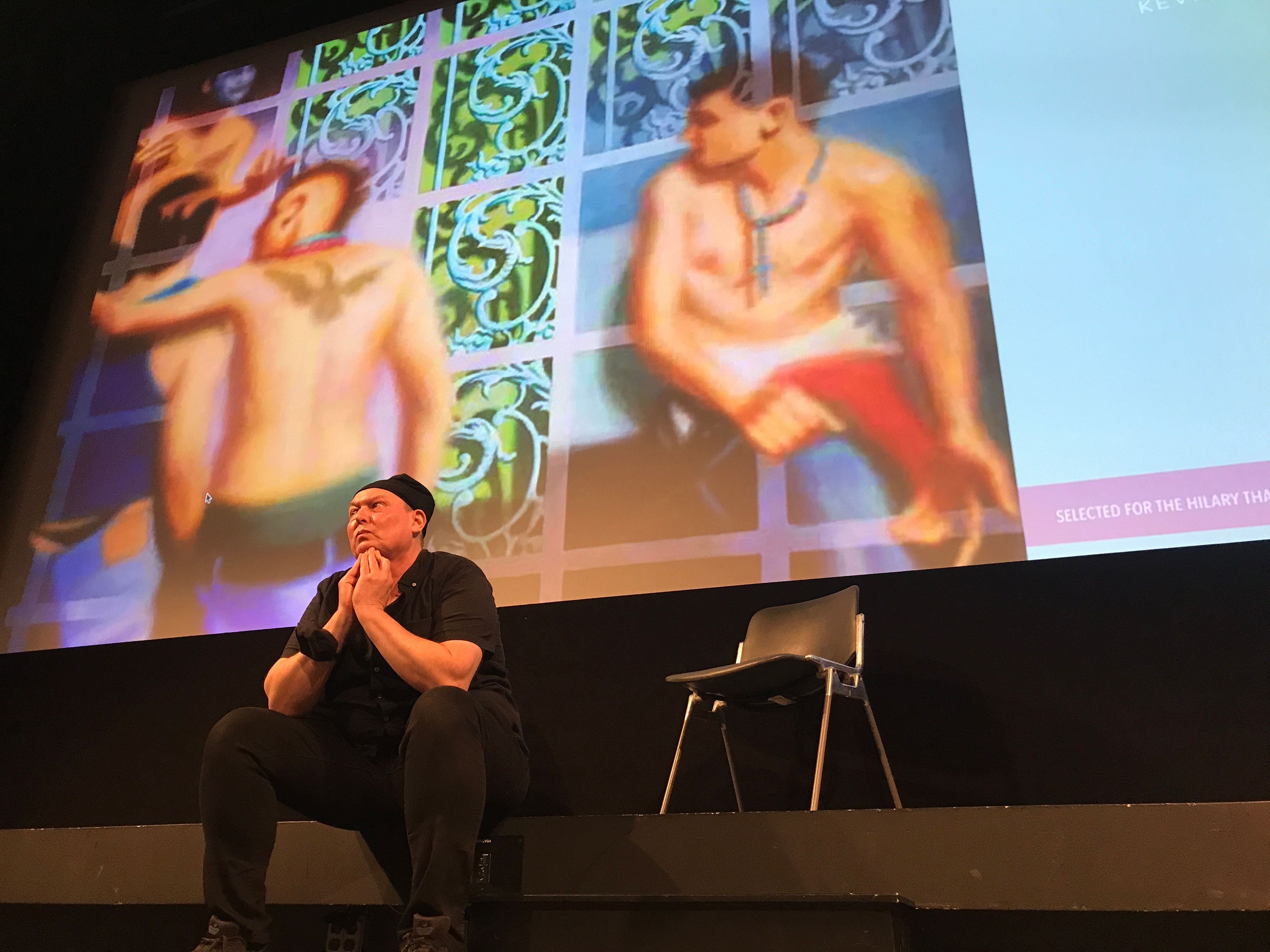
photo: Gearóid Dolan
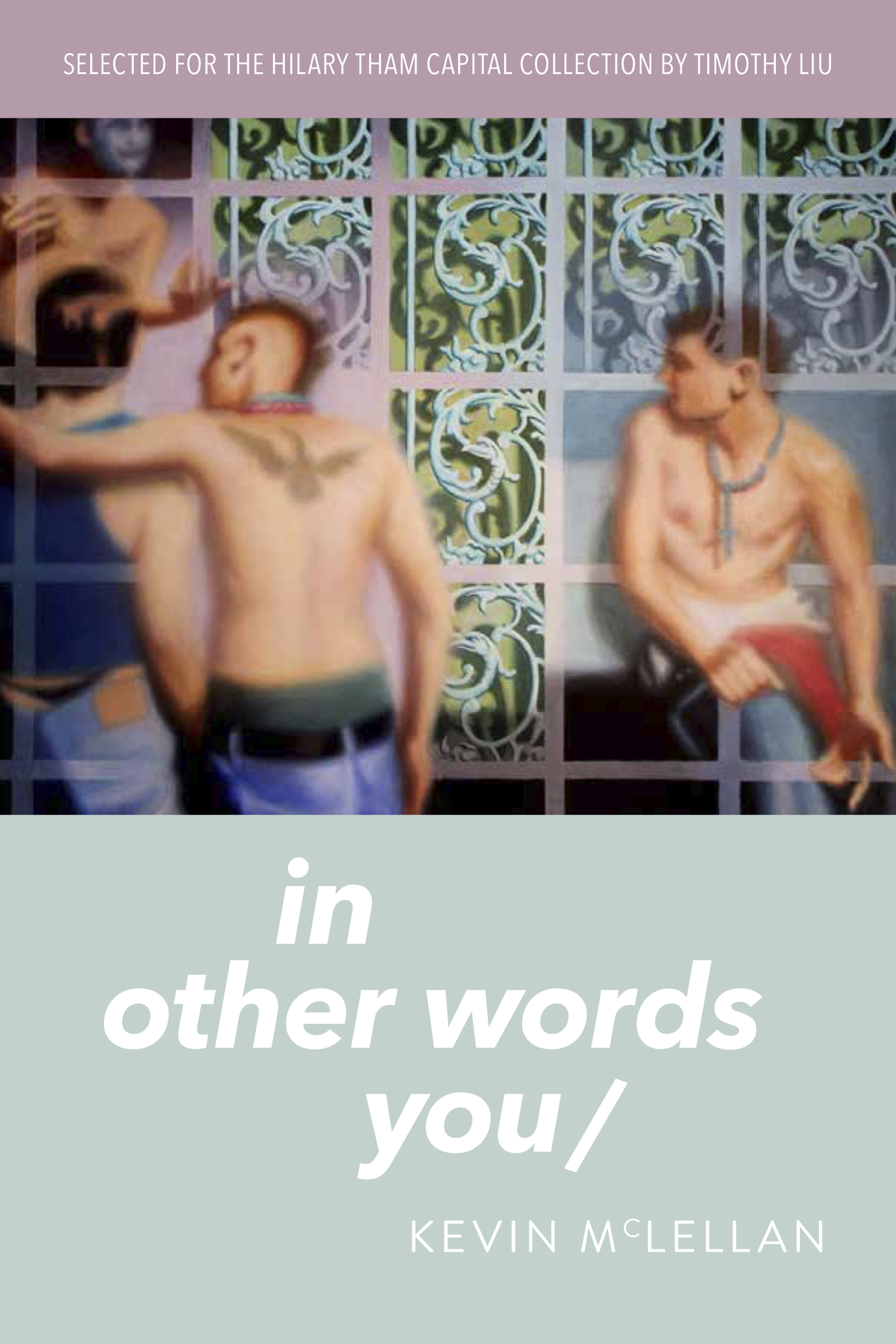
This book traffics in the second person. These queer meditations are both directly addressed to and overheard by a beloved You—Self / Other / Reader conjoined in a dance of enjambed vocables, a syntactic pas de deux of monostichs and couplets punctuated by fragmentary prose epistles. We are reminded of the demands that the libido makes, the joys of (w)rote habits ruptured by the new, all of it backed up by an Eighties soundtrack pulsing hard out of the Castro all the way to the U.K. So fasten your seatbelts. The you you left with will not be the same you upon return.
Timothy Liu, author of Vox Angelica, Say Goodnight, and Of Thee I Sing
***
The astounding poems that comprise–vividly inhabit–Kevin McLellan’s In other words you/ waver between biblical lamentations and a contemplative sense of memorialized irony. They are a series of snap shots–an embodiment of–gay male longing and queer desire told through a series of time fractured images, song fragments, objects, and muted emotions: a remembrance of the past, vividly illuminated. McLellan vividly conjures those moments of emotional panic and sadness–“/ your breathing [stanza break] a leak in the silence”–that jolt us from consciousness into a dream world of not just regret but a veneration, a reverence that borders on holiness. The enormous power of these poems is embedded in their quietness, their contemplation, transfiguration of the loss of the everyday.
Michael Bronski, author of A Queer History of the United States and Culture Clash: The Making of Gay Sensibility
***
Vulnerable, sexy, hopeful, and in every way human, Kevin McLellan’s, in other words you / is a wonder. I was brought so deeply into the intimacy the neighborliness of the worlds McLellen opens to. The bros putting sunscreen on each other. The robin the size of a pigeon. Bodies morphing into dream bodies on endless screens. In this beautiful book the invitation of the / is also testament to a world where AIDS and so many ruptures have robbed us of generations: that devastation that yearning for new connection. But how? How do we keep reaching out, running through the rain past the neighbors, asking someone to meet for a cheese and pickle sandwich. I loved these poems and felt like crying almost the whole time. Is this elegy? Insofar as it is also deep deep celebration. The world goes on somehow. This book is the somehow.
Gabrielle Calvocoressi, author of Rocket Fantastic and The Last Time I Saw Amelia Earhart
ORNITHEOLOGY [The Word Works, 2018] 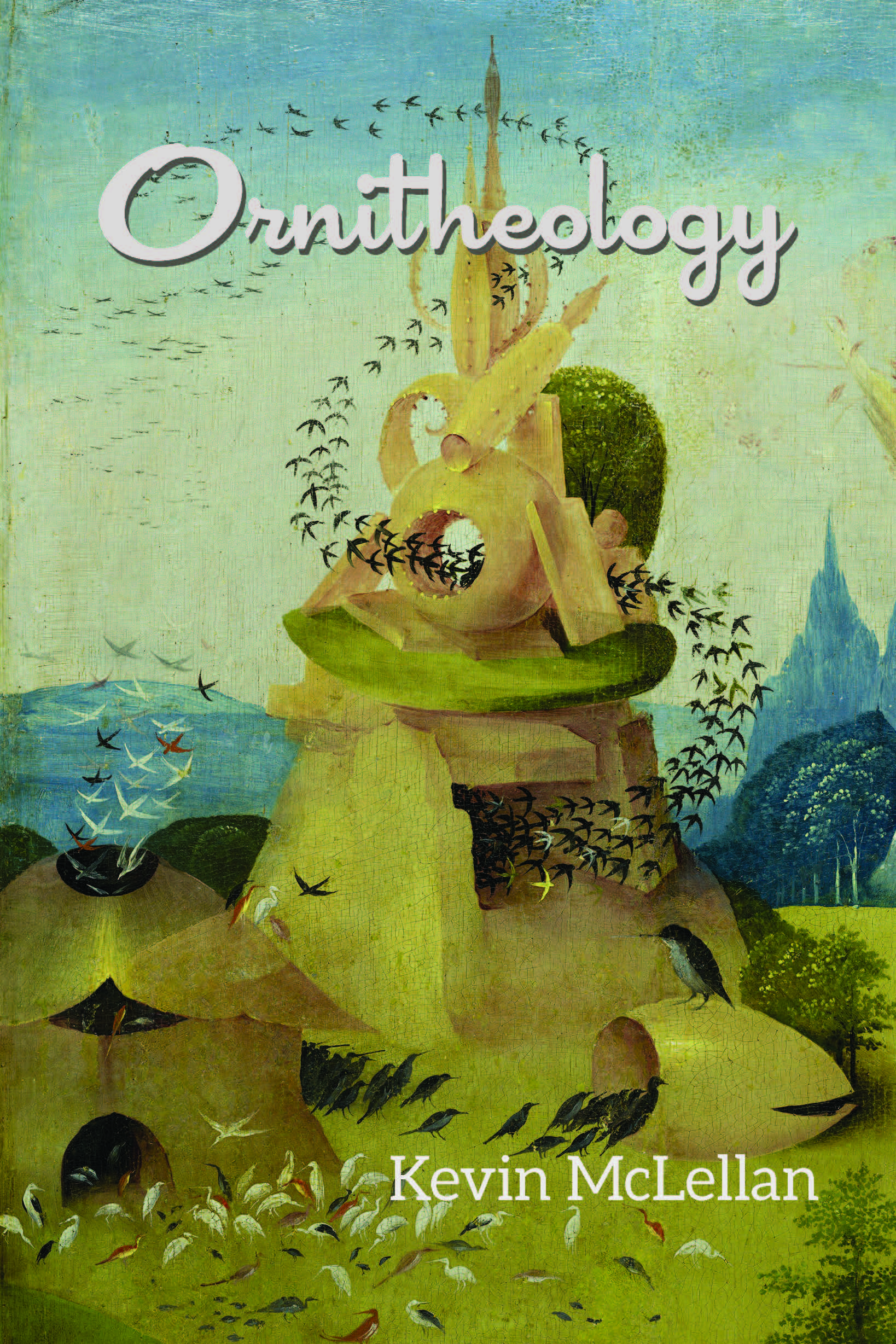
reviews:
by Julie Marie Wade: https://therumpus.net/2018/10/ornitheology-by-kevin-mclellan/
by Megan Alpert: https://tinderboxpoetry.com/ornitheology-by-kevin-mclellan
award: 2019 Massachusetts Book Awards
19th Award: The Wall by Ilan Stavans (Pittsburgh)
19th Honors: Ornitheology by Kevin McLellan (Word Works) and Rewilding by January Gill O’Neil (CavanKerry)
19th Must Reads: Blood Labors by Daniel Tobin; Pray Me Stay Eager by Ellen Dore Watson; Bad Harvest by Dzvinia Orlowsky; White Storm by Gary Metras; My Tarantella by Jennifer Martelli; Shadow-Feast by Joan Houlihan; Night Unto Night by Martha Collins; See the Wolf by Sarah Sousa; Stanley’s Girl: Poems by Susan Eisenberg
praise:
“The word ornitheology, in addition to winning “title of the year,” perfectly captures this book—it’s aerial, and it’s reverent; it’s full of grace, and it glides. And it’s full of birds! It’s also full of great line-breaks, intricate repetitions, flickering moments, and an expanded sense of sky. McLellan, who was raised by canaries, has constructed an amazingly delicate world of resilient fragility in which “light is a seed that the mind must carry.” A stunning book that manages to be both honest and hopeful.”
Cole Swensen
“At the funeral of his beloved sister Helen, Henry Thoreau, standing by the parlor window, heard the call of a songbird and exclaimed “One of us is well at any rate!” In his beautiful ORNITHEOLOGY, Kevin McLellan exclaims a bold prospect of actual spiritual health for these dispiriting days. He has found “an envelope of light” tucked into the corners of our world. He has descried a worthy and redeeming anticipation on branch and cloud and sunbeam.”
Donald Revell
TRIBUTARY (Barrow Street, 2015)
INTERVIEW (Sugar House Review): https://www.sugarhousereview.com/interviews
“The poems of Kevin McLellan’s highly accomplished first collection are haunting and elliptical but never oblique or encoded. Lightning flashes of insight, memory, elegy and stern self-reckonings illuminate the horizons of these poems, which are unsettling and ecstatic by turns. These are the poems of “polysemy without mask” which Paul Celan strove to write, and Kevin McLellan is a poet of singular promise.” David Wojahn
“Writing within a matrix of loss, Tributary begins where language is most labile and finds manifest reasons for praise. Here is a blueprint of what I can only call the partiality of human experience, where time and perception offer moments, never totalities, of individual purpose for existing. If it is true “that a you doesn’t/ exist, and one hundred/ and two times over/ faith is lost” (“Hands: A Tribute”) it is equally true that these poems pay homage to the nature of that secondary state, where faith is as often found. Locating the tribute inside of Tributary, this book is an impressive debut and Kevin McLellan might well be a Heraclitus for the 21st century.” Claudia Keelan
“The poetry of feeling is back — and it’s fierce, now with an exploratory conceptual intelligence and a mysterious, elegant tact. The poems of Kevin McLellan’s Tributary lead forward with their lean tensile lines, their quiet associative confidence, their mysterious trajectories — and they carry us into amazing new territories, brave and strange and luminous, importantly habitable.” Stephen Tapscott
 Kevin McLellan